Browsed by
Tag: worldbuilding

Architect of Worlds – Step Thirteen: Determine Planetary Density, Radius, and Surface Gravity

Architect of Worlds – Step Thirteen: Determine Planetary Density, Radius, and Surface Gravity

Step Thirteen: Determine Planetary Density, Radius, and Surface Gravity

The physical size of a planet depends on not only its mass, but its physical composition. In this step, we will determine the density of each planet, which will immediately give us its radius and surface gravity.

Procedure

The density of a planet is a measure of its mass per unit volume. We will express planetary density in comparison with Earth. Thus, a planet with a density of 1.0 is exactly as dense as Earth. To convert to the usual units, multiply by 5.52 to get grams per cubic centimeter.

Leftover Oligarchs and Terrestrial Planets which form inside the snow line are made primarily out of silicate compounds (i.e., rocks). The heat of the accretion process tends to cause heavy metals, especially nickel and iron, to separate out and settle into a planetary core. The density of the fully formed planet will largely depend on the amount of nickel-iron available, and so on the size of this metallic core. To estimate the density of a Leftover Oligarch or Terrestrial Planet, roll 3d6 and apply the following:

D=(0.90+\frac{\left(3d6\right)}{100})\times\sqrt[5]{M}

Here, D is the planet’s density, and M is its mass in Earth-masses. Round the density off to two significant figures.

In some cases, a rocky Leftover Oligarch may have significantly higher density due to a massive impact event late in the process of planetary formation. The impact scatters most of the lower-density rocky material out into space, leaving behind a planetary body dominated by the nickel-iron core. In our own planetary system, Mercury appears to have undergone such a process. To determine whether a rocky Leftover Oligarch has unusually high density, roll 1d: on a 5 or 6 the planet will be dominated by its metallic core. Add 0.4 to the density computed above.

Failed Cores, and Leftover Oligarchs and Terrestrial Planets that form outside the snow line, incorporate a great deal of water and other ices. The density of the fully formed planet will be significantly lower than that of a rocky planet of the same mass. Determine the density of these planets by rolling 3d6:

D=(0.50+\frac{\left(3d6\right)}{100})\times\sqrt[5]{M}

Again, D is the planet’s density, and M is its mass in Earth-masses. Round the density off to two significant figures.

Gas Giants are constructed almost entirely out of hydrogen and helium gas. Although a gas giant will have a solid core of stone and ice, the factor dominating its density is the degree to which its gaseous envelope is compressed under gravity. To determine the density of a gas giant, let M be its mass. Then use the appropriate formula below:

D=\frac{1}{\sqrt M}\ \left(M\le200\right)

D=\frac{M^{1.27}}{11800}\ (M>200)

Here, D is the density of the gas giant planet. Round the density off to two significant figures.

Radius

The radius of a planet (normally measured in kilometers) is dependent solely on its mass and density. If M is the planet’s mass (in Earth-masses), and D is the planet’s density, then:

R=6370\times\sqrt[3]{\frac{M}{D}}

Here, R is the planet’s radius in kilometers. Round off to three significant figures.

Surface Gravity

The surface gravity of a planet, measured in comparison to standard gravity at Earth’s surface, is again dependent solely on its mass and density. If M is the planet’s mass (in Earth-masses), and D is the planet’s density, then:

G=\sqrt[3]{MD^2}

Here, G is the planet’s surface gravity. Round off to the nearest hundredth of a gravity. Note that under our model, a Gas Giant of 200 Earth-masses or less will always have a surface gravity of exactly 1.

Examples

Arcadia: The computations here are very straightforward. Alice adds more columns to her table and generates planetary densities, adjusting these to taste and then computing planetary radius and surface gravity for each planet.

Radius Planet Type Planet Mass Density Radius Gravity
0.09 AU Terrestrial Planet 0.88 0.92 6280 0.91
0.17 AU Terrestrial Planet 1.20 1.04 6680 1.09
0.30 AU Terrestrial Planet 0.95 1.02 6220 1.00
0.57 AU Terrestrial Planet 1.08 1.04 6450 1.05
0.88 AU Terrestrial Planet 0.65 0.92 5670 0.82
1.58 AU Leftover Oligarch 0.10 0.67 3380 0.36
2.61 AU Planetoid Belt N/A N/A N/A N/A
4.40 AU Large Gas Giant 480 0.22 83000 2.85
5.76 AU Medium Gas Giant 120 0.091 70000 1.00
9.50 AU Small Gas Giant 22 0.21 30000 1.00

Beta Nine: Bob also has no difficulty with the necessary computations.

Radius Planet Type Planet Mass Density Radius Gravity
0.27 AU Terrestrial Planet 0.63 0.98 5500 0.85
0.45 AU Terrestrial Planet 0.59 0.89 5550 0.78
Architect of Worlds – Step Twelve: Determine Eccentricity of Planetary Orbits

Architect of Worlds – Step Twelve: Determine Eccentricity of Planetary Orbits

Step Twelve: Determine Eccentricity of Planetary Orbits

The procedures in Step Eleven will generate a stack of planetary orbits which are likely to be stable, if all of them are perfectly circular. However, few planets follow such carefully arranged orbital paths. In this step, we will assign eccentricity values to the planetary orbits generated in Step Eleven, in such a way that the whole ensemble remains stable.

Starting with the innermost planet and working outward, select an eccentricity for the planet’s orbit. Planetoid Belts will have orbital eccentricity of 0. Planetary orbits tend to have low eccentricity, averaging around 0.1 to 0.2, but cases with eccentricity up to about 0.6 are known.

After each planet’s eccentricity has been determined, the eccentricity of the next planet’s orbit will be bounded. Let R0 and E0 be the orbital radius and eccentricity of the planet that has just been checked, and let R1 and E1 be the orbital radius and eccentricity of the next planet. Then:

\left(1+E_0\right)\frac{R_0}{R_1}-1<E_1<\left(-1+E_0\right)\frac{R_0}{R_1}+1

If this inequality holds, then the two orbits will not cross at any point. Select eccentricity values with this requirement in mind, except for the last planetary orbit to be placed. If the last two planetary orbits are in resonance, the two orbits can cross if the outermost planet’s orbit is inclined at a significant angle. This will make no significant difference when determining the properties of that planet, but it may be of interest as a distinctive feature.

To determine an eccentricity at random, roll 3d6 on the Planetary Orbital Eccentricity Table. If the orbital spacing is tight, modify the roll by -4. If the orbital spacing is moderate, modify the roll by -2. Feel free to adjust the eccentricity by up to 0.05 in either direction. Check randomly generated eccentricity values using the inequality above, and increase or reduce eccentricity as needed.

Planetary Orbital Eccentricity Table
Roll (3d6) Eccentricity
6 or less 0
7-9 0.1
10-12 0.2
13-14 0.3
15 0.4
16 0.5
17 0.6
18 0.7

Once the average distance and eccentricity have been established, the planet’s minimum distance and maximum distance from the primary star can be computed. As before, let R be the planet’s orbital radius in AU, and let E be the eccentricity of its orbital path. Then:

R_{min}=R\times\left(1-E\right)

R_{max}=R\times\left(1+E\right)

Here, Rmin is the minimum distance, and Rmax is the maximum distance.

If a planet’s minimum distance implies an approach to its primary star more closely than the inner edge of the protoplanetary disk, this is acceptable. If its maximum distance implies that the planet moves out into a forbidden zone at some point on its orbit, this is not a stable situation; reduce the planet’s eccentricity to ensure that this does not occur.

Selecting for an Earthlike world: Human-habitable worlds are not likely to have high orbital eccentricity, although a moderate value (no greater than 0.2) is probably not incompatible with Earthlike conditions.

Examples

Arcadia: Alice adds another column to her table and generates orbital eccentricities at random, adjusting each result to taste.

Radius Planet Type Planet Mass Eccentricity
0.09 AU Terrestrial Planet 0.88 0.03
0.17 AU Terrestrial Planet 1.20 0.10
0.30 AU Terrestrial Planet 0.95 0.18
0.57 AU Terrestrial Planet 1.08 0.05
0.88 AU Terrestrial Planet 0.65 0.02
1.58 AU Leftover Oligarch 0.10 0.38
2.61 AU Planetoid Belt N/A 0.00
4.40 AU Large Gas Giant 480 0.00
5.76 AU Medium Gas Giant 120 0.00
9.50 AU Small Gas Giant 22 0.08

Random generation yielded an eccentricity of 0.18 for the third planet, which concerned Alice, since the fourth planet was her Earthlike-world candidate. She therefore evaluated the inequality to determine how the fourth planet’s eccentricity was bounded:

\left(1+0.18\right)\frac{0.30}{0.57}-1<E_1<\left(-1+0.18\right)\frac{0.30}{0.57}+1

-0.38<E_1<0.57

Apparently, even a very large value for the fourth planet’s eccentricity would still be within bounds. Without making a random roll, she selected a small value of 0.05 (comparable to that of Earth) and proceeded.

Alice’s roll for the sixth planet (the Leftover Oligarch) was a modified 15, suggesting an eccentricity of close to 0.4. She reduced this to 0.38, checked the minimum and maximum distances for this orbit, and determined that the planet that moves from 0.98 AU out to 2.18 AU during its “year.” This did not appear to cross the orbit of the fifth planet, nor did it venture into the heart of the planetoid belt just outward. Alice decided to accept this result as a distinctive feature of the planetary system.

Beta Nine: Bob adds another column to his table. Random rolls give him an eccentricity of 0.0 each time, which he tweaks upward for variety. Both planets in the Beta Nine primary’s system have nearly circular orbits.

Radius Planet Type Planet Mass Eccentricity
0.27 AU Terrestrial Planet 0.63 0.03
0.45 AU Terrestrial Planet 0.59 0.02
Architect of Worlds – Step Eleven: Place Planets

Architect of Worlds – Step Eleven: Place Planets

Step Eleven: Place Planets

Beginning close to the primary star and working outward, use the following procedure to determine the orbital radius, type, and mass for each planet in the system.

Procedure

At any given point in this process, the spacing of planetary orbits will be tight, moderate, or wide. Tight orbital spacing tends to occur when the protoplanetary disk was very dense, encouraging many planets to form and migrate inward together, until they fall into a stable but closely packed arrangement. Moderate orbital spacing normally occurs when the disk is less dense, or in the outer reaches of the disk. Wide orbital spacing occurs in very thin disks, or in regions of the disk that have been disturbed by the migration of a dominant gas giant.

Each planetary system will be governed by two orbital spacing regimes, one from the inner edge of the protoplanetary disk to the final location of the dominant gas giant, and another once the dominant gas giant has been placed. Select an orbital spacing regime when beginning the process of placing planets, then choose again immediately after the dominant gas giant has been placed.

To select an orbital spacing regime at random, roll 3d6 and apply the following modifiers:

  • -3 if the disk mass factor is 6.0 or greater
  • -2 if the disk mass factor is at least 3.0 but less than 6.0
  • -1 if the disk mass factor is at least 1.5 but less than 3.0
  • +1 if the disk mass factor is greater than 0.3 but no greater than 0.6
  • +2 if the disk mass factor is greater than 0.15 but no greater than 0.3
  • +3 if the disk mass factor is 0.15 or less
  • +1 if there is a dominant gas giant which underwent weak inward migration
  • +2 if there is a dominant gas giant which underwent moderate inward migration
  • +3 if there is a dominant gas giant which underwent strong inward migration
  • +3 if outward from a dominant gas giant that did not undergo a Grand Tack

The current orbital spacing regime will be tight on a final modified roll of 7 or less, moderate on a roll of 8-13, and wide on a roll of 14 or more.

Before beginning, make a note as to how many gas giant planets must appear in this planetary system. If a dominant gas giant was generated in Step Ten, then there must be at least one gas giant; if a Grand Tack event has taken place, there must be at least two.

Selecting for an Earthlike world: To maximize the probability of an Earthlike world, select orbital placements and planetary types so that a Terrestrial Planet will fall close to the critical radius R=\sqrt L , as discussed under Step Ten.

Sub-Step Eleven-A: Determine Orbital Radius

If no planets have already been placed, determine the first orbital radius as follows:

  • If an epistellar gas giant was generated in Step Ten, then it is automatically the first planet to be placed, and its orbital radius has already been established.
  • If there is no epistellar gas giant, and the spacing is currently tight, then the first orbital radius is equal to the disk inner edge radius.
  • If there is no epistellar gas giant, and the spacing is currently moderate, then if M is the star’s mass, the first orbital radius will be:

R=(2d6)\times0.01\times\sqrt[3]{M}

  • If there is no epistellar gas giant, and the spacing is currently wide, then if M is the star’s mass, the first orbital radius will be:

R=(2d6)\times0.04\times\sqrt[3]{M}

After placement of the first planet, each orbital radius will be based on the previous one. Roll 3d6, and subtract 2 if the previous orbital radius was resonant. The next orbit will be resonant if:

  • The spacing is currently tight, and the 3d6 roll was 14 or less.
  • The spacing is currently moderate, and the 3d6 roll was 10 or less.
  • The spacing is currently wide, and the 3d6 roll was 6 or less.

Roll 3d6 on either the Stable Resonant or the Stable Non-Resonant Orbit Spacing Table, depending on whether the next orbital radius is resonant or not. In either case, multiply the previous orbital radius by the ratio from the table to determine the new orbital radius. Round each orbital radius off to the nearest hundredth of an AU.

Stable Resonant Orbit Spacing Table
Roll (3d6) Ratio Resonance
3-7 1.211 4:3
8-9 1.251 7:5
10-12 1.310 3:2
13 1.368 8:5
14 1.406 5:3
15 1.452 7:4
16-18 1.587 2:1 (see Note)

Note: Immediately after one 2:1 resonance appears, the next orbit will automatically be resonant as well, and will also exhibit a 2:1 resonance. After that, determine the spacing of further orbits normally. Single 2:1 resonances are normally unstable, but a stack of two or more such resonances can be very stable; this is a special case called a Laplace resonance.

Stable Non-Resonant Orbit Spacing Table
Roll (3d6) Ratio
3 1.34
4 1.38
5 1.42
6 1.50
7 1.55
8 1.60
9-10 1.65
11-12 1.70
13 1.75
14 1.80
15 1.85
16 1.90
17 1.95
18 2.00

When rolling on the Stable Non-Resonant Orbit Spacing Table, feel free to select a ratio between two of the values on the table, but be careful not to match any of the precise ratio values from the Stable Resonant Orbit Spacing Table.

In any case, if there exists a dominant gas giant that has not yet been placed, and the new orbital radius is at least 0.7 times the orbital radius of the dominant gas giant as established in Step Ten, then skip to the dominant gas giant instead. Select or randomly generate a new orbital spacing scheme after this point.

If the new orbital radius is greater than the radius of the inner edge of a forbidden zone, then stop placing planets and move on to Step Twelve. Any remaining planetary mass budget is lost.

Sub-Step Eleven-B: Determine Planet Type

For each planet, roll on the Planet Type Table. Refer to the Inner Planetary System column for all planets before the dominant gas giant (if any), or the appropriate Outer Planetary System column for the dominant gas giant and all subsequent planets.

If this planet is the dominant gas giant, or a Grand Tack event took place and this planet is the first one after the dominant gas giant, then roll 2d6+8 on the table. Otherwise, roll 3d6.

If the maximum possible number of gas giants for this planetary system have already been placed, then any subsequent planets will be Terrestrial Planets (inside the snow line) or Failed Cores (outside the snow line).

Planet Type Table
Roll (3d6) Inner Planetary System Outer Planetary System

(Inside Snow Line)

Outer Planetary System

(Outside Snow Line)

3-7 Leftover Oligarch Terrestrial Planet Failed Core
8-11 Terrestrial Planet Small Gas Giant Small Gas Giant
12-14 Medium Gas Giant Medium Gas Giant
15 or higher Large Gas Giant Large Gas Giant

Sub-Step Eleven-C: Determine Planet Mass

The mass MP of a Leftover Oligarch can be generated randomly as:

M_P=(3d6)\times0.01

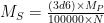
The mass MP of a Terrestrial Planet can be generated randomly as:

M_P=(3d6)\times0.2\times M\times K\times D

Here, M is the mass of the star in solar masses, K is the star’s metallicity, and D is the disk mass factor. Adjust this result by all the following which apply:

  • If there is at least one gas giant in the system, the dominant gas giant underwent at least weak migration during Step Ten, and the current orbital radius is less than 0.7 times the orbital radius of the dominant gas giant after inward migration, then multiply the Terrestrial Planet’s mass by 0.75 for weak migration, 0.5 for moderate migration, and 0.25 for strong migration.
  • If there is at least one gas giant in the system, the dominant gas giant underwent at least weak migration during Step Ten, and the current orbital radius is at least 0.7 times the orbital radius of the dominant gas giant after inward migration, but less than the current orbital radius of the dominant gas giant, then multiply the Terrestrial Planet’s mass by 0.1. Note that this case should only occur if a Grand Tack event took place in Step Ten.

The minimum mass for a Terrestrial Planet is 0.18 Earth-masses. If the estimated mass of a Terrestrial Planet is less than this:

  • If there is at least one gas giant in the system, and the current orbital radius is at least 0.5 times the current orbital radius of the dominant gas giant, then the current orbit will automatically be filled by a Planetoid Belt rather than an actual planet.
  • If there is a forbidden zone in the system, and the current orbital radius is at least 0.85 times the radius of the inner edge of the forbidden zone, then the current orbit will automatically be filled by a Planetoid Belt rather than an actual planet.
  • Otherwise, treat the planet as a Leftover Oligarch instead, and re-roll its mass as above.

The mass MP of a Failed Core can be generated randomly as:

M_P=(3d6)\times0.25

The mass MP of a Small Gas Giant can be generated randomly as:

M_P=4+\left(3d6\right)\times0.25\times M\times D\times\sqrt R

The mass MP of a Medium Gas Giant can be generated randomly as:

M_P=4+\left(3d6\right)\times3\times M\times D\times\sqrt R

The mass MP of a Large Gas Giant can be generated randomly as:

M_P=4+\left(3d6\right)\times15\times M\times D\times\sqrt R

For the last three, M is the mass of the star in solar masses and D is the disk mass factor. If this is the dominant gas giant, then R is the planet’s original orbital radius before any migration or Grand Tack. Otherwise, R is the current orbital radius, or the slow-accretion radius, whichever is less.

In all cases, feel free to adjust the result upwards or downwards by up to one-half of the amount associated with one point on the dice. Round off the planet’s mass to the nearest hundredth of an Earth-mass for Leftover Oligarchs and Terrestrial Planets, and to two significant figures for all other types.

Sub-Step Eleven-D: Adjust Planetary Mass Budget

Mass Cost Table
Planet Type Mass Cost
Planetoid Belt 0
Leftover Oligarch

Terrestrial Planet

Failed Core

M_P
Small Gas Giant 0.9\times M_P
Medium Gas Giant 0.2\times M_P
Large Gas Giant 0.1\times M_P

Once the new planet’s type and mass have been determined, determine that planet’s mass cost using the appropriate formula from the Mass Cost Table. In these formulae, MP is the mass of the planet. Round the mass cost for a given planet off to two significant figures.

Deduct the planet’s mass cost from the current planetary mass budget. “Spending” more than remains in the budget is allowed. However, if the planetary mass budget has now been exhausted, and the minimum number of gas giants has been placed, then stop placing planets and move on to Step Twelve. Otherwise, return to Sub-Step Eleven-A and continue to place planets.

Examples

Arcadia: Alice applies the looped procedure described above to place the planets of the Arcadia system. She has few preferences as to the placement of planets, other than a probably habitable world near an orbital radius of 0.58 AU. She decides to use moderate orbital spacing throughout. She has already determined that she has a planetary mass budget of 83.

Alice uses a combination of random rolls and minor adjustments to suit her taste, and builds a table of planets that looks something like the following:

Radius Planet Type Planet Mass Mass Cost Remaining Mass Budget
0.09 AU Terrestrial Planet 0.88 0.88 82.12
0.17 AU Terrestrial Planet 1.20 1.20 80.92
0.30 AU Terrestrial Planet 0.95 0.95 79.97
0.57 AU Terrestrial Planet 1.08 1.08 78.89
0.88 AU Terrestrial Planet 0.65 0.65 78.24
1.58 AU Leftover Oligarch 0.10 0.10 78.14
2.61 AU Planetoid Belt N/A 0.00 78.14
4.40 AU Large Gas Giant 480 48.9 30.14
5.76 AU Medium Gas Giant 120 24.0 6.14
9.50 AU Small Gas Giant 22 19.8 -13.66

After the third planet, Alice noticed that she was approaching the critical orbital radius for the Earthlike world she wanted, so rather than roll a new orbital radius at random she simply selected a ratio of 1.90 and recorded the result. She also selected a Terrestrial Planet for that orbit, rather than rolling at random and possibly getting a Leftover Oligarch.

Recall that the dominant gas giant in the Arcadia system migrated inward to 1.7 AU before undergoing a Grand Tack, which means that the materials to build terrestrial planets are depleted from about 1.19 AU outward. For the sixth orbit, at 1.58 AU, Alice rolled a Terrestrial Planet whose mass turned out to be below the minimum of 0.18 Earth-masses. Since this orbit was not close enough to the dominant gas giant at 4.4 AU, she substituted a Leftover Oligarch instead. The same thing occurred for the orbit at 2.61 AU, but this orbital radius was greater than half that of the dominant gas giant, so that orbit acquired a Planetoid Belt instead.

The next orbital radius after the Planetoid Belt was very close to that of the dominant gas giant, so Alice skipped to that radius instead. Since the dominant gas giant went through a Grand Tack, the next planet outward was guaranteed to be another gas giant. The third gas giant exhausted the planetary mass budget, so Alice stopped generating planets at that point. Notice that even if the first gas giant had exhausted the mass budget, Alice would have been required to place the second, since there was a Grand Tack event. Also, notice that the first two gas giant planets are in a 3:2 resonance.

Alice concludes that the Arcadia planetary system somewhat resembles ours, with rocky planets close in, gas giant planets further out, and a planetoid belt in between. On the other hand, the system’s denser protoplanetary disk meant that the planets were more tightly packed, yielding more substantial rocky planets and fewer gas giants.

Beta Nine: Bob generates the Beta Nine planetary system entirely at random, curious to see what results he will get. He already knows that the system has a planetary mass budget of 5.1, and that a forbidden zone exists at 0.67 AU.

There is no gas giant in the system, and the disk mass is 0.5. Bob makes a modified 3d6 roll of 16, and determines that the planets will have wide orbital spacing. Random rolls generate the following:

Radius Planet Type Planet Mass Mass Cost Remaining Mass Budget
0.27 AU Terrestrial Planet 0.63 0.53 4.57
0.45 AU Terrestrial Planet 0.59 0.59 3.98

The next orbital radius turns out to be at 0.74 AU, which is beyond the edge of the forbidden zone, so no more planets will be placed, even though part of the planetary mass budget remains available.

Architect of Worlds – Step Ten: Place Dominant Gas Giant

Architect of Worlds – Step Ten: Place Dominant Gas Giant

Step Ten: Place Dominant Gas Giant

The evolution of the protoplanetary disk, and the formation of planets, will be dominated by the presence of the first gas giant planet to form. This planet may or not be the most massive, but it is usually the gas giant planet that forms closest to the primary star, and its movement through the disk will tend to affect the formation of other planets. In this step, we determine where the dominant gas giant planet (if any) forms, and how it migrates across the protoplanetary disk. This will, in turn, tell us how many gas giants may form.

Procedure

Begin by checking whether the dominant giant forms in a “hot” or “cold” region of the protoplanetary disk, or whether a dominant gas giant will form at all. Then determine how many gas giants can form in the planetary system, and how the dominant gas giant migrates to its final position.

First Case: Hot Dominant Gas Giant

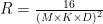
If the protoplanetary disk has very high density of dust, or if the primary star is very bright and so has a distant snow line, the dominant gas giant may form in the warm, dry region inside the snow line. To check for this possibility, compute the following. If M is the mass of the star in solar masses, K is the system’s metallicity, and D is the disk mass factor:

R=\frac{16}{{(M\times K\times D)}^2}

R is measured in AU. If R is less than the disk inner radius, set R to be the disk inner radius instead. The result is the radius at which the dominant gas giant will form, based solely on the accretion of stony planetesimals. This will occur only if:

  • R is less than the snow line radius;
  • R is less than the slow-accretion radius; and
  • R is less than the radius of any forbidden zone.

If all three conditions hold, make a note that the dominant gas giant forms at this radius. Otherwise, check the second case.

Second Case: Cold Dominant Gas Giant

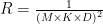
In most cases, the dominant gas giant will form outside the snow line, where ice as well as dust is available for the formation of planetesimals. To check for this possibility, compute the following. If M is the mass of the star in solar masses, K is the system’s metallicity, and D is the disk mass factor:

R=\frac{1}{{(M\times K\times D)}^2}

For a quick check, if the radius for the first case above was computed, simply divide it by 16 to get the radius for this case. If R is less than the radius of the snow line, set R to be the radius of the snow line instead. The result is the radius at which the dominant gas giant will form, based on the accretion of icy planetesimals. This will occur only if:

  • R is less than the slow-accretion radius; and
  • R is less than the radius of any forbidden zone.

If both conditions hold, make a note that the dominant gas giant forms at this radius. Otherwise, no gas giant will form in this planetary system; skip ahead to Step Eleven.

Number of Possible Gas Giants

Depending on the size and mass of the protoplanetary disk, more gas giants may form at larger orbital radii. To determine the further evolution of the planetary system, we need to estimate how many gas giants are possible.

To make this estimate, compute the following. Let R be the radius at which the dominant gas giant forms, as determined in the two cases above. Let Rmax be the slow-accretion radius or the radius of any forbidden zone, whichever is less. Then:

N=1+(6\times\log_{10}{\frac{R_{max}}{R}})

Round N down to the nearest integer. The result is the estimated number of possible gas giants in the planetary system. Note that N must be at least 1, otherwise no gas giant can form in the system and we should already have skipped ahead to Step Eleven.

Disk Migration

Once the dominant gas giant begins to form, it is likely to migrate through the protoplanetary disk. At first, it will migrate inward due to interactions with the gas of the disk. As it migrates inward, its gravity will disrupt the orbits of any planetesimals it approaches or passes, affecting the later evolution of inner planets. To estimate the extent of the dominant gas giant’s inward migration, roll 3d6 on the Planetary Migration Table. Modify this roll by -3 if the disk mass factor is 4 or greater, or by +3 if the disk mass factor is less than 1.

Planetary Migration Table
Roll (3d6) Status After Inward Migration
3-6 Epistellar Gas Giant – Dominant gas giant migrates inward to the disk inner edge radius.
7-9 Strong migration – Dominant gas giant migrates inward to about 0.25 times its initial orbital radius, or to the disk inner edge radius, whichever is greater.
10-12 Moderate migration – Dominant gas giant migrates inward to about 0.5 times its initial orbital radius, or to the disk inner edge radius, whichever is greater.
13-15 Weak migration – Dominant gas giant migrates inward to 0.75 times its initial orbital radius, or to the disk inner edge radius, whichever is greater.
16-18 No migration – Dominant gas giant fails to migrate inward at all.

The table indicates how to estimate the orbital radius to which the dominant gas giant migrates during this phase of its evolution. For the strong migration, moderate migration, or weak migration cases, feel free to adjust the multiplying factor by up to 0.1 in either direction. Make a note of the resulting orbital radius.

The Grand Tack

At some point in its formation, the dominant gas giant may fall into a strong resonance interaction with one or more gas giants forming further away from the primary star. This is likely to halt inward migration through the protoplanetary disk, and may lead to outward migration back away from the star.

A Grand Tack will take place only if there are at least two possible gas giants in the planetary system, as estimated above. If this is the case, roll 3d6. A Grand Tack takes place if the result is 13 or higher.

If a Grand Tack takes place, estimate the final orbital radius of the dominant gas giant by rolling 3d6 and applying the following:

R=(1+\frac{3d6}{10})\times R_M

Here, RM is the planet’s orbital radius after any inward migration is applied, and R is its orbital radius after the Grand Tack is finished. If R is greater than half the radius of any forbidden zone, then set R to that value. Otherwise, feel free to adjust the final orbital radius by up to 5% in either direction.

Selecting for an Earthlike world: The critical orbital radius for an Earthlike world depends on the current (rather than initial) luminosity of its primary star. To estimate this orbital radius, if L is the star’s current luminosity, then:

R=\sqrt L

Here, R is the most likely orbital radius for an Earthlike world. A terrestrial planet with enough mass to support an Earthlike environment is only likely to form in one of three cases:

  • The dominant gas giant migrated inward completely past this radius, and no Grand Tack event took place to pull it back outward;
  • The dominant gas giant migrated inward but entered a Grand Tack event before reaching about 1.5 times this radius; or
  • The dominant gas giant did not migrate inward at all.

Of these three cases, the second (moderate inward migration followed by a Grand Tack) is the most likely to give rise to an Earthlike world.

Examples

Arcadia: Alice suspects that the primary star of the Arcadia system is too dim to promote the formation of a hot dominant gas giant, but she checks anyway. The star’s mass is 0.82 solar masses, its metallicity is 0.44, and the disk mass factor she selected earlier is 2. She computes:

\frac{16}{{(0.82\times0.44\times2.0)}^2}\approx30.7

This is, as Alice expected, well past the slow-accretion line. Moving on to the case of a cold dominant gas giant, she divides the above result by 16 and gets a radius of about 1.9 AU. This is inside the snow line, so Alice resets the radius to be equal to the snow line at 2.2 AU; this is where the dominant gas giant will form.

Alice now needs to estimate how many gas giants could form in the Arcadia planetary system. She computes:

1+\left(6\times\log_{10}{\frac{14}{2.2}}\right)\approx5.8

Rounding down to the nearest integer, she finds that the Arcadia system could have as many as five gas giants in it. Depending on subsequent results, it may have fewer than this number, but it cannot have more.

Rather than generate the dominant gas giant’s evolution at random, Alice wants to maximize the probability of an Earthlike planet forming at the critical orbital radius, which she computes from the primary star’s current luminosity of 0.34 solar units:

\sqrt{0.34}\approx0.58

She therefore decides that the Arcadia system’s primary gas giant exhibited weak inward migration, moving from its initial orbital radius of 2.2 AU to about 1.7 AU, inside the snow line but nowhere near the eventual Earthlike world’s position. Then she decides that the planet underwent a Grand Tack event, plausible since there are at least two possible gas giants in the system. She decides that the dominant gas giant migrated back outward to an orbital radius of 4.4 AU. She makes note of all three radii for future reference.

Beta Nine: Bob knows that a red dwarf star will almost certainly not develop a hot gas giant, so he moves directly to the second case, computing the radius at which a cold gas giant will form:

\frac{1}{{(0.18\times2.5\times0.5)}^2}\approx19.8

This is far beyond the inner edge of the forbidden zone created by the star’s brown-dwarf companion. The primary star of the Beta Nine system will not have any gas giant planets at all. Bob moves on to the next step in the design sequence.

Architect of Worlds – Step Nine: Structure of Protoplanetary Disk

Architect of Worlds – Step Nine: Structure of Protoplanetary Disk

Over the next few days, I’ll be posting the current draft of the next section of the Architect of Worlds project. Here, now that we’ve designed and arranged the star(s) of a given system, we can give each star its own family of attendant planets, determining their basic physical and dynamic properties along the way.


Step Nine: Structure of Protoplanetary Disk

In this step, we determine the most important properties of the star’s protoplanetary disk, which will in turn govern the size and placement of the planets that form. These properties include the location of the disk’s effective inner and outer edges, the location of the “snow line,” and the relative mass and density of the disk.

Procedure

Select or compute each of the following parameters, and record the results for later use.

Disk Inner Edge

Astronomers are not clear where the inner edge of a protoplanetary disk will normally be located. In fact, it’s possible that the disk has no inner edge, since material continues to fall onto the star’s surface throughout the period of planetary formation. Planets which migrate strongly inward do seem to stop some distance away from the primary star, but their eventual orbital period may be quite short, on the order of a few days.

Select a radius for the inner edge of the protoplanetary disk. To select a distance at random, roll 2d6:

R=(2d6)\times0.003\times\sqrt[3]{M}

Here, R is the radius of the disk inner edge in AU, and M is the star’s mass in solar masses. Round off to two significant figures.

Snow Line

The “snow line” represents a distance from the star where volatiles, especially water, can freeze and remain solid within the protoplanetary disk. Inside the snow line, any solid matter within the disk will tend to be dry: dust leading up to masses of stone. Outside the snow line, water and other volatiles will be present in the form of ices. Thus, crossing the snow line outward, an observer would see a sharp rise in the amount of solid material available for planetary formation. The most probable location for the formation of the system’s largest planet is at the snow line.

Determine the radius of the snow line as follows. If L0 is the initial luminosity of the star in solar units, then:

R=4.2\times\sqrt{L_0}

Here, R is the radius of the snow line in AU. Round off to two significant figures.

Slow-Accretion Line

On the outer edges of a planetary system in formation, the density of available material is low and the orbital period of that material is long. Protoplanets forming in this region may have difficulty sweeping up all the material that’s theoretically available. Most of that material is likely to remain free when the period of planetary formation ends, to be swept out into interstellar space. We model this effect by establishing a “slow-accretion line,” beyond which the formation of planets is unlikely.

Determine the radius of the slow-accretion line as follows. If M is the mass of the star in solar masses, then:

R=15\times\sqrt[3]{M}

Here, R is the radius of the slow-accretion line in AU. Round off to two significant figures.

Disk Density

Mass available for the formation of planets will be limited, since the bulk of the protostellar nebula will have ended up in the star rather than in the protoplanetary disk. The mass in the disk is dominated by gas, primarily hydrogen and helium. Other constituents of the disk include frozen volatiles (outside the snow line) and dust.

For astronomers, measuring the mass of a protoplanetary disk is rather difficult. Most estimates indicate that a star’s protoplanetary disk will have about 1% of the star’s mass, although this can vary widely. For this design sequence, we will need to determine the disk mass factor. This is a multiplicative factor; for example, a star with mass equal to the Sun and a disk mass factor of 1.0 will have a protoplanetary disk roughly as massive as the Sun’s.

Select a disk mass factor between 0.1 and 1.0, with most protoplanetary disks having a density factor close to 1. To select a disk mass factor at random, roll 3d6 on the Disk Mass Factor Table. Feel free to select a value between two results on the table. Each component in a multiple star system can have its own disk mass factor.

Roll (3d6) Disk Mass Factor
3 0.1
4 0.13
5 0.18
6 0.25
7 0.36
8 0.5
9 0.7
10-11 1.0
12 1.4
13 2.0
14 2.8
15 4.0
16 5.6
17 7.5
18 10.0

Selecting for an Earthlike world: The ideal disk density to produce an Earthlike world depends on many factors. To maximize the probability of an Earthlike world, multiply the selected disk mass factor by the star system’s metallicity; the result should be close to 1.

Planetary Mass Budget

The disk mass factor will determine how much material is available for the formation of planets. We will measure this material as a planetary mass budget, deducting from this budget as planets are placed. The planetary mass budget is an estimate of the metals that will end up in planets, where “metals” is used in the astronomical sense (that is, all elements heavier than helium).

To determine the planetary mass budget, let M be the mass of the star in solar masses, let K be the star’s metallicity, and let D be the disk mass factor determined above. Then:

B=80\times M\times K\times D

Here, B is the planetary mass budget, measured in Earth-masses. Round off to two significant figures.

Special Case: Forbidden Zone

If the star under development is a member of a multiple star system, it is possible that one of its companion stars will approach so closely as to disrupt part of the protoplanetary disk. This will give rise to a forbidden zone, a span of orbital radii in which no stable orbit is possible. As the planetary system is designed, planets will not form within the forbidden zone, and any planet that migrates into the zone will be lost.

To check for the existence of a forbidden zone, compute one-third the minimum distance for the nearest companion star. This will be the radius of the inner edge of any potential forbidden zone.

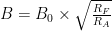
If a forbidden zone exists, and its inner edge is inside the slow-accretion line, then some of the disk material that might otherwise have formed planets has been stripped away by the companion star’s influence. Adjust the planetary mass budget as follows. If B0 is the planetary mass budget before accounting for the forbidden zone, RF is the radius of the inner edge of the forbidden zone, and RA is the radius of the slow-accretion line, then:

B=B_0\times\sqrt{\frac{R_F}{R_A}}

Here, B is the adjusted planetary mass budget. Round off to two significant figures.

Examples

Arcadia: Alice is working with a single star with a mass of 0.82 solar masses, initial luminosity of 0.28 solar units, and metallicity of 0.63. She decides that the disk inner edge will be at about 0.025 AU. She computes that the snow line will be at about 2.2 AU and the slow-accretion line will be at about 14.0 AU.

Alice makes note of the star’s metallicity of 0.63, and selects a disk mass factor of 2.0. Multiplying the two together yields a result of 1.26, which is reasonably close to 1 and seems likely to yield an Earthlike world at the end of the design process. The planetary mass budget will be:

80\times0.82\times0.63\times2.0\approx83

Since the primary star is a singleton, there will be no forbidden zone, so Alice has all the information she needs to complete this step of the design process.

Beta Nine: Bob is working on the primary star of the Beta Nine system, a red dwarf with a mass of 0.18 solar masses, luminosity of 0.0045 solar units, and metallicity of 2.5. He rolls 2d6 for a result of 8, and determines that the disk inner edge will be at about 0.014 AU. He computes that the snow line will be at about 0.28 AU, and the slow-accretion line will be at about 8.5 AU.

Bob rolls 3d6 on the Disk Mass Factor Table, and gets a roll of 8. This suggests a disk mass factor of 0.5. Bob accepts this result, noticing that the product of 0.5 and the star’s metallicity of 2.5 is 1.25, not far from the value most likely to yield an Earthlike world. The initial planetary mass budget will be about 18 Earth-masses.

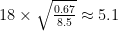
Beta Nine is a binary star system, with a brown dwarf companion in a close orbit. The minimum separation of the two stars is 2.0 AU. One-third of this is 0.67 AU, well within the slow-accretion line, but not within the snow line. There is a forbidden zone for this star, with its inner edge at 0.67 AU. The existence of the forbidden zone will (dramatically) reduce the available planetary mass budget:

18\times\sqrt{\frac{0.67}{8.5}}\approx5.1

The Beta Nine primary will have fewer planets, since the brown dwarf companion has stripped away most of the material needed to form them!

Status Report (13 July 2018)

Status Report (13 July 2018)

With the release of “Pilgrimage” I was thinking that my next major project would involve getting the next Aminata Ndoye story (“In the House of War,” a roughly 20,000-word novella) polished up and out the door.

Going back and reviewing the most recent version of that story, though, I think I may need to do some world-building work first. I’ve done a fair amount of research since I first wrote that story, and my ideas about how interstellar civilization is structured have evolved a bit.

So, new plan of action:

  • First item will be to revise and improve the planetary-system design sequence for Architect of Worlds. I’ll be publishing the revised material here over the next week or so.
  • Then I’m going to re-work my current map of the interstellar neighborhood (and the associated database of nearby planetary systems). Along the way I’m going to double-check my computations from about 2014-2015 about the galactic density of habitable planets, sentient life, high-tech civilizations, and so on. It’s possible that my new design sequences will give rise to a somewhat different set of assumptions.
  • I may also do at least a sketch map of the local galactic spiral arm, just to give me a better idea of the “terrain” in khedai space.
  • Once I have all that done, I should be able to revise “In the House of War” for publication, and I might have a clearer picture to support further stories in the setting too.

Looks as if my fantasy novel, The Curse of Steel, will be going on the back-burner for a while. That’s okay. I’ve learned the hard way to let my muse go where it wants to go at the moment. At least I’ll be making progress on Architect of Worlds, and I should be able to get another Human Destiny story out the door at the end.

Designing the Vasota Species

Designing the Vasota Species

At this point, I’ve played through the Phil Eklund games Bios: Genesis and Bios: Megafauna, and I’ve used some of the results of those games to design the Karjann star system and its one Earth-like planet, Toswao. Now for the fun part – looking at the game results in more detail to come up with (hopefully) the design for the planet’s sole tool-using, language-using species.

Hmm. This species will need a name. A few moments paging through a random-name generator, and my brain comes up a word that sounds a little like the name of the planet. So be it: a singular member of the species will be a vaso, and the plural and collective form of the name is vasota. Today, we’re going to be designing the vasota species.

Bios: Megafauna Analysis

There’s one methodological point that I should probably make up front.

When playing Bios: Megafauna, you’re invited to think of yourself as playing the role of one or more single species. In fact, that’s not a good way to think about the situation. The game covers hundreds of millions of years, and very few single species have ever persisted over such long periods. A better way to think about it is that you’re tracing a few of the most prominent clades.

Over time, species give way to new species in the clade, many steps taking place in each game turn, at a level too fine-grained for the simulation to make explicit. The acquisition of cards and cubes for one “species” in your tableau follows the development of traits characteristic of the clade, over a long period of time. The final state of a “species” in the game may describe only one actual species in the generated world, but that’s not required.

A corollary of this is that your tableau of cards and cubes can’t be a complete description of any given species in the chain. Cards in Bios: Megafauna only appear once and never again, so only one “species” can ever hold a given trait in a game. That doesn’t make sense if you take it too literally. More likely, what the cards mark is that a given clade is notable for having that trait – maybe it was the first to evolve the trait, or many members of the clade have invested heavily in it.

Thus, if a species doesn’t have a given card, that doesn’t necessarily mean it lacks the corresponding trait, it just means its own version of the trait is unremarkable. On the other hand, if a species does have a specific card, it probably exhibits that trait to an unusual degree.

So, what do we know about the vasota, given their representation as a “species” at the end of my Bios: Megafauna game?

Well, since the species belonged to Player White, that means it is endoskeletal, analogous to the vertebrates of Earth. That doesn’t tell us much yet; it could resemble fish, amphibians, reptiles, birds, mammals, or none of the above.

At the end of the game, the species was size 3, which the rulebook informs us is approximately 20 kg in mass. Since the size scale is logarithmic by powers of 10, we could take this as indicating a typical body mass somewhere between about 6 kg and about 65 kg. Smaller than a human, but not necessarily a lot smaller.

The species had the following cube set, taking “monster” markers into account:

  • 4 red (nervous system, reflexes, “pounce” hunting and “dash” evasion)
  • 4 yellow (circulatory system, stamina, “chase” hunting and evasion)
  • 6 blue (reproductive system, investment in sexual behavior and offspring)
  • 2 green (digestive system, ability to process lots of biomass, survival in warm climates)
  • 3 white (cold adaptations, survival in cold climates)

The preponderance of red and yellow over green and white cubes suggests the species has a strong tendency toward carnivory. On the other hand, in actual play the species (or, rather, members of the same clade) spent a lot of time in the “herbivore” position in the biomes it occupied. I suspect we can square the circle by assuming that the species is omnivorous, but prefers meat if it can get it. Earthly examples might include raccoons, or certain species of bears.

Meanwhile, wow, that’s an impressive array of blue cubes. The species still has one of the blue “monster” markers, which indicates a lot of investment. I would guess that this species comes down heavy on a K-selection strategy: finding high-quality mates, then having just a few offspring and lavishing lots of time and attention on them. This species may be more invested in sexual behavior and child-rearing than humans are, which is kind of impressive.

Let’s look at the traits that this clade has acquired over time, both in their basic and promoted forms.

  • Courtship Dance and Territorialism – These were the first two traits acquired, and Territorialism is what gave the clade its blue “monster” marker. It’s interesting that the first traits this clade developed, the ones which continued to define its behavior throughout its existence, were both behavioral in nature. That suggests some very deep-seated instincts toward sexual competition, display behavior, and territory defense. Whatever social groups this species naturally forms, they probably have a strong sense of in- and out-group distinctions, and a willingness to face down outsiders who trespass on their range.
  • Brainstem and Pituitary Gland – Early investments in a sophisticated system of nerve and hormonal control. Even from the beginning, these were smart animals.
  • Periodontum – Clearly, even though this clade never invested heavily in being able to process lots of plant matter, it does have a jaw apparatus, with teeth supported by specialized tissues.
  • Hormones and Muscle Shivering – More sophisticated biochemistry to regulate tissues and behavior. Muscle Shivering gave the clade its white “monster” marker, indicating a strongly endothermic animal that can deal well with widely varying climates. At this point, I’m comfortable calling this species pseudo-mammalian, with one exception that I’ll mention later.
  • Vertical Flexure – The first trait that seems relevant to the physical body plan. This clade is made up of striding walkers, whose footsteps fall under the body, as opposed to “sprawlers” which crawl along with their feet out to either side. That suggests the ability to move quickly, and possibly to develop a good bipedal stance that can free up the forelimbs for manipulation.
  • Pons & Medulla and Hypothalamus – Still more sophistication in the brain, giving the species good reflexes and strong regulation of homeostatic processes. I’m not seeing a lot of forebrain-like development, but a look through the Bios: Megafauna trait deck tells me that almost all the brain-development cards focus on the hindbrain. A species that has lots of brain cards is probably going to be smart regardless.
  • Long-Term Memory and Larder Hoarding – More brain traits! At this point I’m comfortable assuming this species will be about as intelligent as humans, but here’s an interesting indicator as to what kind of intelligence it will have. I see an emphasis on good memory, not just quick information processing or abstract reasoning.
  • Olfactory Organ and Smelling Nose – Here we have some indication as to what kind of sensory apparatus the species has. We can assume that it has eyes, ears, and so on, but the cards tell us that the species is remarkable for its sense of smell. The card text specifically calls out the noses of bears, which have possibly the best sense of smell of any land animal on Earth.

Finally, we can look at the Emotions held by the clade at the end of the game:

  • One red Emotion, representing “anger,” aggression, quick action, and the “fight” part of the fight-or-flight reflex.
  • Two blue Emotions, representing “jealousy,” pride and self-centeredness, and sexual attraction and desire.
  • One purple Emotion, representing “curiosity,” the drive to learn, the need to try new tools and techniques.

This suggests a creature that is at least somewhat human-like in psychology: aggressive, curious, strongly driven by the need to find a mate and raise offspring. Again, this species may be a bit more motivated by personal pride and sexual desire than we are, depending on whether you believe humans would have two blue Emotions in their card tableau too.

GURPS Analysis

Now for a bit more fine-grained detail, which I’ll describe by designing a character template for the vasota in GURPS terms.

The older book GURPS Uplift is actually a great source for this kind of work. It has an alien-design sequence based on algorithms that Dr. David Brin developed for his own creative work, one which considers how a species evolved to intelligence. That makes it a good fit for my current project, which is taking a different approach to do the same thing.

GURPS Uplift is a Third Edition sourcebook, but it still works very well as a set of guidelines when designing aliens. If you want something more closely tied to Fourth Edition, James Cambias built a similar system for the current edition of GURPS Space. The fact that I’m using GURPS Uplift instead is purely a matter of personal preference – I got used to that system long before James and I co-authored GURPS Space.

I’m going to work my way through the major headings in the GURPS Uplift design sequence. Rather than do everything with random dice rolls, I’m going to select options and traits to fit what I saw in the Bios: Megafauna game, and see what kind of template that gives me.

Home Environment

Thinking back to the Bios: Megafauna game, the White Archetype species spent most of its time living in forested continental biomes. Once Toswao flipped to a relatively cool climate on the last turn, those were probably temperate rather than tropical forests. We’ll run with that.

Our intelligent species evolved in a temperate forest, as “climbers” (ground-dwelling creatures that can climb trees if they need to, like bears or gorillas). Looking at suggested traits, I’ll go with +2 skill bonuses to Climbing and Jumping. Those seem to fit the large numbers of red and yellow cubes in the clade’s tableau, which suggest an agile and athletic creature.

Incidentally, recall that the surface gravity of Toswao is about 1.09 G, a bit higher than Earth’s, but not high enough to count as a “heavy world.”

Body Plan

I don’t see a lot of traits in the Bios: Megafauna tableau to suggest anything unusual here. The Vertical Flexure trait is the only body-plan item, and that doesn’t imply anything too alien.

I’ll assume that the vasota are bog-standard, bilaterally symmetrical tetrapods. They have evolved into a fully upright, bipedal stance that frees up their forelimbs for manipulation. A vaso has one pair of hands and one pair of walking paws (“feet”). That doesn’t give us any modifiers to the ST or DX scores.

I’m agnostic as to whether the vasota have any “special limbs” (e.g., tails) but a quick dice-roll on the pertinent table from GURPS Uplift says no. Moving on . . .

Diet

I’ve already established that the vasota are omnivores, who prefer meat when they can get it. GURPS Uplift calls this kind of species “hunter-browser” omnivores. Glancing at the list of suggested traits, I see the possibility of half a level of the Enhanced Move advantage. This fits the picture that’s growing in my head, and it works just as well in Fourth Edition rules, so I’ll go with that.

Metabolism

We already know the vasota are endothermic, strongly resembling Earthly mammals. GURPS Uplift simply calls this being “warm-blooded,” which doesn’t carry any advantage or disadvantage. Sounds good to me, let’s move on.

Society

This is an important item – the size and structure of their natural social group – which will strongly affect vaso psychology. GURPS Uplift would normally encourage most species to fall at the “family group” or “pack/troop” level. For the vasota, I think I’m going to do something different, a social structure that appears in the natural world but isn’t easy for the GURPS Uplift charts and tables to capture.

The idea is that the vasota are “solitary but social” in a very specific pattern. Both males and females are highly territorial in their natural state, but they express that territoriality differently.

In pre-civilized times, female vasota formed small family groups. An elderly female would live with her daughters and grand-daughters, all in the same shared range, centered on some reliable source of food. Young males stayed with their mothers for a while, but eventually they would get pushed out to fend for themselves. Mature males lived mostly solitary lives on the fringes, setting up and defending their own home ranges. A male’s range probably overlapped with at least one female clan-range, and that’s where he went to visit during mating season, but male ranges tended not to overlap with each other. This pattern is found in some Earthly primates – some lemurs and tarsiers, and (sort of) in orangutans as well.

With the appearance of tool use, language, and more complex societies, the vasota modified their age-old social pattern. As with humans, females ended up doing most of the work of foraging, and later of agriculture. Yet vasota males were never able to cooperate very well, so unlike human males, they rarely managed to force females into a subordinate role by applying coordinated violence. Matrilineal, matriarchal clans became the first villages, and later the first towns. Males continued to live a wandering and solitary life, sometimes associating themselves with a female community, offering whatever service they could in exchange for security and social contact.

A social system like that is effectively a hybrid. Vasota males fall under the “Solitary” line on the GURPS Uplift chart, whereas the female communities fall under the “Family Group” line. None of that has a direct effect on physical or mental capabilities, but it will affect the personality. Later, I’ll be looking at the possibility of different sets of Mental Disadvantages for vasota males and females.

Size

This is one area in which the GURPS Uplift tables won’t be of much use. Third Edition GURPS handled the size of objects, along with ST and HT scores and Hit Points, very differently than Fourth Edition.

I’m going to assume that adult vasota average around 40 kg in mass, well within the range implied by their Bios: Megafauna size category. If they’re not a lot thinner or blockier than humans, that suggests that they’ll be about 80% as tall as an average human, small enough to get a Size Modifier (SM) of -1. In Fourth Edition GURPS, this is a zero-point feature.

A creature that small is likely to have a lower ST score than the human average. According to the Build Table on p. B18, a human of average build who’s about 1.5 meters tall and masses about 40 kg is likely to have a ST score of about 7. Let’s bump that up a little, since the vasota do live in a stronger gravity field. I’ll set the average ST score for the vasota at 8, a 20-point disadvantage. I’ll leave their basic HT score at 10, since I don’t see anything to indicate that they’re less energetic or robust than humans.

Food Chain Position

The clade from which the vasota originated were rarely the peak predators in their environment. Only with the development of tool-use did they push to the top of their food chains. Let’s stipulate that their position on the food chain is “near the top,” which doesn’t confer any advantages or disadvantages in the GURPS Uplift charts.

Activity Cycle

I don’t have any preference for whether the vasota are naturally diurnal or nocturnal. A quick dice-roll on the pertinent table in GURPS Uplift gives me “diurnal,” which confers no unusual traits. I’ll take that, and assume the species sleeps about as much as humans do, and at the same times.

Reproduction

We already know a fair amount about vasota reproductive strategies. For example, we know they may be even more heavily invested in a K-selection strategy than humans are. I’ll assume a natural lifespan comparable to that of humans, and a “very few offspring, intense investment” strategy. GURPS Uplift suggests a Sense of Duty disadvantage directed toward young vasota, and that makes sense to me.

I’ll also assume a very high degree of neoteny, in which adult members of the species retain many of the psychological traits of the young. That suggests a high IQ score, and a higher than average level of curiosity that might lead to a Mental trait or two.

Let’s assume that the vasota have two sexes, just as humans do (the “produce lots of cheap gametes” and the “produce a few expensive gametes” genders, which we call “male” and “female”). Just to make them a little less like mammals, I’ll stipulate that the vasota are egg-layers, the females producing very small clutches. When the young hatch, they have a lot of physical growth and development to do, but they can eat bits of meat, fruit, and high-value seeds almost at once.

Natural Weapons

None of the cards in the Bios: Megafauna tableau had anything to do with natural weaponry. I’ll assume that the vasota are about as well-armed as humans (blunt teeth and nails, with no venom or other special weapon systems).

Body Covering

There were no traits in the Bios: Megafauna tableau to describe the vasota integument, either. I’ll assume they don’t have anything remarkable. Again, to reduce the resemblance to Earthly mammals, let’s assume that the vasota have a covering of thin scales, like those of a lizard or snake. This might be enough for a single point of Damage Resistance.

Senses

We did get one set of traits that had to do with the vasota senses, suggesting a superb sense of smell. I’ll assume that their senses are otherwise unremarkable:

  • Good vision, two eyes frontally placed, with no special visual abilities.
  • Average hearing with no special auditory abilities.
  • No electrical or magnetic senses.
  • Excellent senses of smell and taste, suggesting Acute Taste and Smell and Discriminatory Smell.
  • Average tactile and kinesthetic senses, with no special abilities.

Communications

There were no cards to suggest specific communication abilities – no pheromones, warning cries, anything of that nature. Let’s assume that the vasota communicate primarily through spoken language, in the same frequency range as the human voice. Their voices might sound a little funny to us, but with a little work we should be able to understand each other.

Mental Abilities

We did see above that the vasota might be a little more intelligent than humans, since they retain neotenous traits (such as curiosity and mental adaptability) far into their lifespan. We also got one Bios: Megafauna card suggesting unusual mental ability – Long-Term Memory, later promoted to Larder Hoarding. Rather than give the vasota higher than average IQ, I’ll give them Eidetic Memory instead, which in Fourth Edition rules is a 5-point advantage.

Personality Traits

GURPS Uplift has an elaborate system for working out a species’ personality traits. It measures each species on a set of eight numeric scales that translate into specific Advantages and Disadvantages. It’s an interesting system, although perhaps not to be taken too literally.

Instead of working through the system in detail, I simply glanced through it, thinking about how the vasota would measure up. Naturally, since the vasota have had high-tech civilization for thousands of years when we first meet them, some of their primitive psychological traits have changed to make them more suited for a complex society. Even so, male and female vasota still have different personalities.

Male vasota remain rather solitary creatures, comfortable around aliens but not very good at “reading” them, and very unhappy in large crowds. They are driven by personal ambitions and desires, and are not very altruistic. In GURPS terms, they have the Broad-Minded quirk, and moderate levels of the Loner, Oblivious, and Selfish disadvantages.

Female vasota are more human-like in their psychology, better at cooperating and living in groups. They are much less likely to wander and travel, and don’t encounter aliens as often. They have only the Proud quirk. They have no specific psychological disadvantages to keep them close to home, but individuals will often have Dependents, Duty, or Sense of Duty disadvantages that make travel and adventuring difficult.

Both males and females have the Curiosity trait.

So, let’s pull all this together, and write up a pair of GURPS racial templates:

Male Vaso (5 points)

  • Attribute Modifiers: ST-2 [-20].
  • Secondary Characteristic Modifiers: SM -1 [0].
  • Advantages: +2 to Climbing [4]; +2 to Jumping [4]; Acute Sense of Taste and Smell +4 [8]; Damage Resistance 1 [5]; Discriminatory Smell [15]; Eidetic Memory [5], Enhanced Move (Ground) 1/2 [10].
  • Disadvantages: Curiosity (12 or less) [-5]; Loner (12 or less) [-5]; Oblivious [-5]; Selfish (12 or less) [-5]; Sense of Duty (toward young) [-5].
  • Quirks: Broad-Minded [-1].

Female Vaso (20 points)

  • Attribute Modifiers: ST-2 [-20].
  • Secondary Characteristic Modifiers: SM -1 [0].
  • Advantages: +2 to Climbing [4]; +2 to Jumping [4]; Acute Sense of Taste and Smell +4 [8]; Damage Resistance 1 [5]; Discriminatory Smell [15]; Eidetic Memory [5], Enhanced Move (Ground) 1/2 [10].
  • Disadvantages: Curiosity (12 or less) [-5]; Sense of Duty (toward young) [-5].
  • Quirks: Proud [-1].

There we go! A male vaso is roughly comparable to a human character – a little smaller and less physically robust, but fast and agile, and capable of surprising feats of scent and memory. Not very sociable, to be sure, but perfectly capable of contributing to (say) a starship crew or a colonial venture. Female vasota are much the same physically, and more congenial, although we probably won’t often see them away from their home-world.

Final Comments

Let’s sum up. Over the past month, I’ve done a play-through of Bios: Genesis and Bios: Megafauna, and used the results of that to design a star system, a habitable world, and the sentient species native to that world. The results seem to work well enough for my purposes, and I can see the possibility of much more unusual outcomes in the process. This may seem to be a cumbersome approach, but I find that it pays off quite well. The game-play itself only took a few hours of time; most of the work came from documenting the results for this series of blog-posts. If I were to do this again, I suspect I could rattle off results of similar scope in a week of evenings.

At this point, I have about half of a story in the back of my mind, in which my human protagonist (Aminata Ndoye) meets and befriends a male vaso aboard her assigned ship. The two of them get involved in a political intrigue when he returns to his homeworld, and Aminata learns new lessons about dealing with non-humans in the context of the interstellar empire she serves. I think I’m going to let this story percolate in the back of my mind for a few days, and then see if I can get it down on the page. More news on that as it happens.

Building Toswao

Building Toswao

This morning I’ll be focusing on the single Earth-like world in the Karjann star system, Toswao, the focus of my play-through of Bios: Genesis and Bios: Megafauna.

Here, I’m getting into world-design procedures that I haven’t fully documented yet. The part of the Architect of Worlds project that’s giving me the most trouble is procedures for working out the properties of individual worlds. I find that there are a lot of contingent factors, many of which have been completely ignored by the world-design systems that I’ve previously found in print, or written myself. Some of those factors are not well-understood even today, or are so complex that no simple model will really capture them. So it’s a challenge to come up with a design sequence that’s coherent, straightforward to apply, and likely to reflect a wide range of plausible results. Research continues.

Of course, for Toswao, a lot of parameters are already set and it’s just a matter of fleshing out details, while checking to make sure there’s nothing wildly implausible. That’s an easier problem.

Let’s start with what we know. Toswao is a terrestrial planet with a mass of 1.18 Earth-masses. I have  a straightforward model for the density of terrestrial bodies, and with one dice roll I can compute that Toswao has an average density of 1.044 times that of Earth (5.72 g/cc). That immediately gives us a planetary radius of 6635 kilometers (1.04 times that of Earth) and a surface gravity of 1.09 G.

Here’s the first big question that most published world-design sequences would ignore: does Toswao have a strong magnetic field?

It turns out that item is important. A planetary magnetic field is critical for protecting the surface environment from solar and cosmic radiation. It’s also critical for making sure the planet can retain a significant atmosphere. Without a strong magnetic field, the solar wind comes into direct contact with the outer atmosphere, and will tend to strip away the air over fairly short time-scales. This effect turns out to be quite a bit stronger than simple thermal loss, so if you want a habitable planet, you really need to make sure compasses work there.

Toswao is nice and big and dense, so it will certainly have a liquid nickel-iron core whose rotation can create a dynamo. But that leads us to a second question that most world-design sequences probably get wrong: how quickly does Toswao rotate, and where is its rotational axis?

The world-design sequences I’ve seen (and the ones I’ve written in the past) generally assume that terrestrial planets all rotate at similar rates, their rotational axes well-behaved, modified (if at all) only by tidal effects over long periods. Yet even in our own planetary system we can see that this isn’t the case, especially when we look at Venus. Recent models for the formation of terrestrial planets suggest that the process is much more catastrophic than we once assumed. Every terrestrial planet, even Earth, has been shaped by enormous impacts and collisions, so that its final rotation axis and rate are more random than we might expect.

Then, of course, the tidal interactions between a terrestrial planet and its primary star (and any major natural satellite) turn out to be much more challenging to model than we might like. This isn’t because the physics of the situation are poorly understood – they’re not – but because the system is very sensitive to small details. If Earth was a perfect, elastic, and uniform sphere, it would be easy to determine exactly how solar and lunar tides would affect its rotation over eons. Unfortunately, terrestrial planets are quite a bit more complex and varied than that.

In the light of that, I have yet to produce a game-ready model for planetary rotation that I’m happy with. For now, let’s assume that Toswao’s rotation is similar to that of Earth (especially since the planet does have a major natural satellite like our Moon). Toswao is younger than Earth, so I’ll assume that its rotation rate is a bit faster, and that its satellite is a little closer in than the Moon. Without laying out all of my selections and computations in full, here’s some results:

Toswao

  • Mass: 1.18 Earth-masses
  • Density: 1.044 Earth (5.72 g/cc)
  • Radius: 6635 kilometers (1.04 Earth)
  • Surface Gravity: 1.09 G
  • Orbital Radius: 0.99 AU
  • Orbital Eccentricity: 0.08
  • Periastron: 0.91 AU
  • Apastron: 1.07 AU
  • Angular Diameter of Primary Star: 0.55 – 0.64 degrees
  • Orbital Period: 0.9660 standard years (352.84 standard days)
  • Rotation Period: 22.608 standard hours (0.9420 standard days)
  • Day Length: 22.669 standard hours (0.9445 standard days)
  • Apparent Year Length: 373.56 local days
  • Axial Inclination: 24°

Given these values for Toswao’s rotation, we can be confident that it has a nice, strong magnetosphere to protect the air and surface. We can proceed on the assumption that Toswao has a more or less Earth-like atmosphere.

We already know some things about that atmosphere, from the final state of the Bios: Megafauna game, and from our computations when we were determining the planet’s placement in orbit around Karjann. A quick random dice roll gives us an “atmospheric mass” for Toswao of about 1.2, noticeably greater than that of Earth. Along with the known details of composition that I generated earlier, that gives us:

  • Atmospheric Mass: 1.2
  • Surface Atmospheric Pressure: 1.3 atmospheres
  • Atmospheric Composition: Nitrogen 64%, oxygen 34%, argon 1.6%, carbon dioxide 0.2%, other components 0.2%. Nitrogen partial pressure about 0.83 atm. Oxygen partial pressure about 0.44 atm. Carbon dioxide partial pressure about 0.003 atm.
  • Hydrographics: 88% ocean coverage
  • Planetary Albedo: 0.5
  • Greenhouse Effect: 44 K
  • Average Surface Temperature: 292 K (19° C, or 66° F)

That atmosphere looks breathable for unmodified and unprotected humans, but just barely. The partial pressure of oxygen is approaching high enough to be toxic over long exposures, and there’s a lot of CO2 in the air too. We would probably find Toswao’s air rather invigorating in the short term, but causing some damage to our eyes and lungs in the long term. In the meantime, we might find our cognitive function a bit muddled by CO2-triggered changes in blood flow to our brains. Might want to wear a light breather mask just to keep our blood chemistry happy, if we’re going to be spending much time here.

One more set of details. We know from the Bios: Genesis game that Toswao had a “big whack” event like Earth’s, giving rise to a big, Luna-like natural satellite. I double-checked Toswao’s “Hill radius,” the distance at which Karjann’s gravitational influence overwhelms Toswao’s, and found that there’s plenty of room for the planet to retain a moon.

A random roll sets the satellite’s mass, from which I can quickly determine its density, radius, and surface gravity. I made the non-random decision to place this satellite a little closer to Toswao than Luna is to Earth, about 50 Toswao-radii rather than Luna’s distance of 60 Earth-radii. Here are the numbers:

Toswao’s Moon

  • Hill Radius: 2.06 million kilometers
  • Orbital Radius: 320,000 kilometers
  • Orbital Eccentricity: Negligible
  • Mass: 0.0165 Earth-masses
  • Density: 0.64 Earth (3.53 g/cc)
  • Radius: 1880 kilometers
  • Surface Gravity: 0.189 G
  • Orbital Period: 19.180 standard days
  • Apparent Lunar Cycle: 23.776 standard hours (0.9907 standard days)
  • Synodic Month: 20.283 standard days
  • Angular Diameter: 0.69 degrees (from planetary surface)

So there we go. There are a few more physical parameters we could probably generate, but this should give us enough to work with for now.

Toswao is an ocean planet, a little warmer than Earth, with lots of clouds. Visiting humans would find the local gravity heavy, but manageable even over long periods. The planet’s atmosphere is breathable for humans in the short term, although we might find it difficult under long exposures. I haven’t explicitly computed the strength of local tides, but both the primary star and the moon are more massive and closer than their counterparts on Earth, so I would expect stronger tides.

Toswao has Earth-like axial tilt and so exhibits similar seasons, although the situation is complicated by a larger orbital eccentricity. Depending on how the orbital parameters line up with the axial inclination, that might tend to either damp out or to accentuate seasonal variation.

I don’t intend to draw a world map, unless the story emerging in my head turns out to be a lot more extensive than I expect. Still, we can say a few things, based on the end state of the Bios: Megafauna game. I would expect the planet’s small continents to be heavily forested, at least in their natural state. Lots of green in the shallow seas, too, to contribute to that high oxygen concentration. I wouldn’t expect to see a lot of deserts or wastelands.

A useful exercise, not only because it gave me a world to use in my creative work, but also because it gave me a motivating example, bringing out details that I’ll need to address in upcoming sections of Architect of Worlds. In the next couple of posts, I’ll be working out a character template for the dominant sentient species native to this world, and writing up some of their back story.

Building the Karjann System

Building the Karjann System

Okay, for the last few weeks I’ve been logging a play-through of the Phil Eklund games Bios: Genesis and Bios: Megafauna, in a demonstration of how those games can be used to support worldbuilding for science fiction. A quick way to review those posts would be to check out the Worldbuilding by Simulation category and look at all the posts since the beginning of June 2018.

Now it’s time to do some math, and design the star system and main habitable planet compatible with the results of the Bios games. I’ll be using the current draft design sequences from my Architect of Worlds project. In particular, the current draft of the star system design sequence can be found at Architect of Worlds: Designing Star Systems. The design sequence for designing planets hasn’t been published yet, and I need to do a fairly extensive revision pass before that happens, but its current draft should be sufficient for this purpose.

I begin by coming up with a pair of names for the habitable planet (Toswao) and its primary star (Karjann). I have absolutely no constructed language work to back those up, and probably won’t go that far for a single story. Those names simply emerged from the back of my mind under the stimulus of a random-name generator; I think they look and sound pleasant, so there we go.

Primary Star

Looking back on the Bios: Megafauna game, I recall that Toswao has spent most of its history with very warm climate, well above Earth’s present average temperature. That suggests a primary star that’s a touch more massive than Sol, and therefore probably more luminous.

Meanwhile, we also know that Toswao is quite a bit younger than Earth. With adjustments, the Bios: Genesis game covered about 3.75 billion years from planetary formation to the end of the Proterozoic period. The Bios: Megafauna game covered about 240 million years from there to the first appearance of a tool-and-language-using species. Add that up and we get 3.99 billion years, which I’m comfortable rounding off to 4.0 billion. Evolution moved fast here! That doesn’t necessarily indicate anything about Karjann, but in my mind the notion of a somewhat more energetic primary star also fits a faster pace of development. So I decide to non-randomly select a primary star mass of 1.04 solar masses.

With a dice roll, I find that Karjann is a solo star – no need to generate details for any companions. I set the star system’s age at exactly 4.0 billion years, and randomly generate the system’s metallicity, ending up with a value so close to 1.0 that I decide to round that off as well. Working through the design sequence, I end up with the following parameters:

Karjann

  • Mass: 1.04 solar masses
  • Main Sequence Lifespan: 8.6 billion years
  • Current Age: 4.0 billion years
  • Metallicity: 1.0
  • Current Effective Temperature: 5800 K
  • Current Luminosity: 1.23 sols
  • Radius: 0.0051 AU (767,000 km)
  • Spectral Class: G2V

Karjann turns out to be quite similar to Sol, a cheerful yellow star about halfway through its stable lifespan, a touch hotter and noticeably brighter.

Planetary System

Before beginning planetary system design, I need to figure out where the habitable world (Toswao) is going to be placed. Here, I have a few clues.

The final state of the Bios: Megafauna game suggested that the planet’s atmosphere had 34% free oxygen. This is pretty high, equivalent to the highest level ever seen in Earth’s atmosphere, back in the Cretaceous era. Some research tells me that such a high free oxygen level has to be supported by very high levels of carbon dioxide, several times the current value in Earth’s atmosphere. So I pin the current CO2 level as about six times Earth’s pre-industrial level, or about 1800 parts per million.

The final Bios: Megafauna state also suggests a planetary albedo of 0.8, but that isn’t at all plausible. The most reflective water-vapor clouds have about that albedo, so a long-term planetary albedo that high means that the entire planet is covered with the brightest possible cloud canopy. Unlikely over a long period, and how is anything surviving with direct sunlight cut off from the photosynthetic base of the food chain? Still, a planet with more hydrographic surface than Earth is likely to have more cloud cover, and therefore a higher overall albedo. I’ll set the planet’s albedo to 0.5, which is probably still very high, but not utterly implausible.

That albedo also suggests a lot more water vapor in the atmosphere than Earth currently sees. I’ll tentatively assume double the amount.

At low concentrations, greenhouse gases appear to affect the planetary average temperature in a logarithmic fashion: every time you double the amount of a greenhouse gas, the temperature goes up by a fixed amount. This question is hideously complex, and climate scientists don’t have any simple models for it, but for CO2 the effect seems to be about 3 K of increase for every doubling of the concentration in the atmosphere. Assuming that water vapor behaves similarly, the greenhouse effect on Toswao appears to be about 11 K more aggressive than on pre-industrial Earth. That gives us a total greenhouse effect of about 44 K.

In Bios: Megafauna, planetary climate is marked on a scale which varies up and down during the game. Next to the bottom of the scale is a space marked “Ice Age,” which I tentatively interpret as a planetary average temperature of 280 K, equivalent to the middle of the last glacial age. The top space on the scale is marked “Runaway Greenhouse,” which I’ll tentatively take as a planetary average temperature of about 350 K, high enough (assuming standard atmospheric pressure) for the equatorial oceans to start boiling. There are twelve spaces between these two points on the scale, so a rough guess of about 6 K per space makes sense. At the end of my play-through, the climate was in the higher of the two spaces in the “Cool” climate band, two spaces above the “Ice Age” point. That suggests a planetary average temperature of about 292 K, a bit warmer than present-day Earth.

If the actual surface temperature is about 292 K, then a greenhouse effect of 44 K suggests an albedo-adjusted blackbody temperature of about 248 K. The relevant formula is:

T_B=278.8\times\sqrt[4]{\frac{\left(1-A\right)L}{R^2}}

Here, A is the planetary albedo, L is the primary star’s luminosity in sols, and R is the planet’s orbital radius in AU. Plugging in values and solving for R, we get an orbital radius of about 0.99 AU, surprisingly quite close to the value for Earth.

Okay, now that I know where to place Toswao, I can lay out the whole planetary system. In particular, I determine that the primary gas giant (the Jupiter-analogue) engaged in moderate inward migration, but then got caught up in a “Grand Tack” event which pulled it back outward to its present position. This depleted the population of planetesimals in the inner system, leading to smaller planets, more widely spaced. Here’s the basic table of planets:

Radius Planet Type Planet Mass
0.41 AU Terrestrial Planet 1.05
0.68 AU Leftover Oligarch 0.15
0.99 AU Terrestrial Planet (Toswao) 1.18
1.68 AU Terrestrial Planet 0.65
2.95 AU Terrestrial Planet 1.12
4.27 AU Large Gas Giant 350
6.83 AU Large Gas Giant 400

I didn’t meddle too much with the random dice rolls here, aside from ensuring that a Terrestrial Planet would appear at the right orbital radius to become Toswao. I did have two results that I wanted to ensure, given the outcome of the Bios: Genesis game.

First, I needed there to be a Mars-analogue close to Toswao, so that at least some microbial life would make the journey very early in the system’s development. The dice gave me a Leftover Oligarch in the next inward orbit, so I was happy with that. That planet was probably relatively cool and moist in the first hundred million years or so after formation, but while Karjann has heated up over the eons, the small planet has been baked dry and is now more barren than Mars.

Second, I wanted to make sure there was no “late heavy bombardment” (LHB), since that event didn’t take place in the Bios: Genesis game. The best theory we have about the LHB, assuming it happened at all, is that our gas giant planets went through a period of orbital instability that also disrupted the Kuiper Belt. Here, the outermost gas giant is still well within the “slow-accretion line” that represents the nominal start of the system’s Kuiper Belt. Hence the belt has never been disrupted, and is probably much more full and dense than ours. An analogue might be the Tau Ceti system, whose Kuiper Belt appears to be at least ten times as dense as Sol’s.

So here we go, before I head off to work this morning. The Karjann system has a solo star and seven planets, including the Earthlike world Toswao. The inner planets are likely to be a super-hot Venus type, and a very hot, dry Mars-like. Beyond Toswao we have two cold worlds unlike anything in the Sol system, probably with lots of ice, the outermost likely to have a methane-ammonia atmosphere if the temperatures are right. Then two Jovians, which apparently gathered up all the mass that might otherwise have formed ice giants on the fringes of the system. Finally, a dense Kuiper Belt that probably indicates lots of comets. No asteroid belt, although there are likely to be extensive collections of junk in the Trojan points of the two gas giants.

Next time, I’ll focus on Toswao and its major natural satellite, and work out the details of its physical environment.

Bios: Megafauna – Final Developments

Bios: Megafauna – Final Developments

This play-through of Bios: Megafauna is approaching a climax. By the end of Turn Six it was obvious that the game wasn’t going to last the usual eleven or more turns, unless something very strange happened. In particular, one player was making very good progress toward developing a species that exhibited language and tool use.

Turn Seven (180 – 210 million years)

The events this turn are Ultra-Plinian VEI 8 Eruption Winter and Desertification. A large-scale volcanic eruption puts teratonnes of dust and ash in the stratosphere, cutting off sunlight and producing a snap cold period. Meanwhile, continental interiors and rain-shadow areas dry out, pushing back the world-spanning forests. Actual changes to the map are moderate, with a new mountain hex appearing on Beta, and a desert hex appearing (for the first time) on Delta. The placement of these hexes means that one piece for each player becomes Endangered.

The atmosphere currently has 30% free oxygen, planetary albedo is at 0.35, and the climate is Warm. All players get four actions.

White resizes both his Archetype and his Swimmer species to size 4. He acquires Feelers for the Swimmer species, immediately promoting the trait to Tentacles. The Swimmer species now has the green Monster marker, and becomes an extremely efficient herbivore. White places two Swimmer pieces in Newborns.

Black acquires Spinneret Silk Ballooning for his Archetype species, and Wrists & Ankles for his Flyer. (Okay, this Flyer species is starting to look very unlike any flying arthropods – that is, insects – on Earth.) Black places one Archetype creeple and two Flyer creeples into Newborns.

Green acquires Cerci for the Burrower, promotes Cerci to Whiskers and Windpipe to Long Neck, acquiring the green Monster marker for the Burrower. Finally, one of his species might be able to compete with Orange more effectively. Green places two Burrower pieces into Newborns.

Orange engages in neoteny, removing one blue cube from each of his three species. He then resizes all three species to size 4. He places two Archetype and two Swimmer pieces into Newborns.

During dispersal, White and Black place their pieces without incident, filling in empty ecological niches on the Alpha and Beta cratons. Green pushes back against Orange’s encroachment of last turn, placing his two Burrowers to attack an Orange Armored carnivore and an Orange Swimmer herbivore. In both cases, the attack works and the Orange pieces become Endangered. Orange consolidates by placing his pieces to fill in empty spaces, in two cases bumping an Armored piece up to the carnivore position.

Since the White Archetype is endothermic, it is able to move away from the new mountain hex where it was Endangered. Black and Green each lose one piece, and Orange loses three.

Turn Eight (210 – 240 million years)

The events this turn are Eltanin Pacific Bolide Winter with Lignin Crisis. A major asteroid impact (not on the scale of the Chicxulub event, but significant) sets off a major climate tipping point, just as the continents are becoming choked with forests full of dead lumber. Many of the events thus far have been moderate; this one turns out to be a major turning point in the game.

The Alpha-Beta continent slides northward, just enough to match the latitude of the southern parts of the Gamma-Delta continent – “rafting” is now possible between them, for the first time in many millions of years. Forests spread slightly, and sea levels rise slightly as well.

Then all hell breaks loose. As noted last time, Black now holds the “Medea” card, which means he controls the movement of the various terrain disks when an event calls for that. He also has the one-time ability to drastically magnify certain events, at the cost of giving up the card to another player. He decides to do this now: instead of moving one white disk from the Atmosphere track to the Clouds track, he chooses to move all of them, representing a major climate tipping point set off by the asteroid impact. The effect is to drastically reduce planetary temperature, while in turn causing the planet’s surface to be wreathed in clouds, blocking out sunlight. Black surrenders the Medea card to White.

The next major event on the card proves decisive. This is the first mutagen event in the game, essentially representing a mass extinction. Many of the largest and most sophisticated species in play will be forced to give up traits, giving way to smaller and more versatile cousins. The way this is implemented is that each species must be compared to something called the “dark heart limit,” which is based on the oxygen level for Players Orange, Black, and White, and on the planet’s current albedo for Player Green. Every species must give up cubes until it has no more than the dark heart limit. If any “basal organs” (cubes sitting directly on the species’ base card) are lost, the species becomes extinct at once.

The current dark heart limit is 7 for Players Orange, Black, and White, but only 1 for Player Green (all those clouds are blocking the intensive photosynthesis his species need). Here’s how it shakes out:

  • White’s two species are highly specialized, especially since the Archetype has two Monster markers. However, literally at the last minute while re-checking the rules for a mutagen event, I noticed a rule that permits endothermic species (with one or more white cubes) to add twice their number of white cubes to the dark heart limit. The White Archetype, since it is size 4 and has a white Monster marker, effectively has four white cubes, meaning that its dark heart limit is actually 15. White is able to preserve the species almost intact by resizing it to size 3, and giving up one blue cube from the Pituitary Gland trait. Meanwhile, the White Swimmer species is not endothermic, but it also has a far smaller set of cubes. White is able to avoid the loss of any traits by resizing the Swimmer to size 2.
  • Green is forced to use a dark heart limit of 1 . . . and both of his species have more basal organ cubes than that. Green’s two species both become completely extinct, removed entirely from the map. Green is now a “Lazarus” player. He can move back onto the map later, but for now he has effectively been knocked out of the game. There is much baleful glaring at Black from his side of the table.
  • Black smiles, as both of his species are under the dark heart limit and he takes no losses.
  • Orange also gets off lightly – this is exactly the event he was concerned about from the beginning of the game, and his repeated use of the “neoteny” rule has reduced his exposure. The Orange Archetype loses the Pallial Lung trait, and two green cubes from the Gizzard Stones and Pancreas traits. Since the latter two cards make up the species’ green Emotion, he retains them even through they no longer carry any cubes (the “Cheshire Cat” rule). Orange’s other species are under the dark heart limit.

With events complete, the planet’s atmosphere has 34% free oxygen, the albedo is at 0.8 (!), and the climate is now Cool. Player Green gets 2 actions, all other players get 4.

White is the first player to move, and he spots a superb opportunity. One of the effects of a “mutagen” event is that it clears the current tableau of available traits and lays out a new set of cards for players to acquire. As it happens, this brings two cards to the fore that White would very much like to snap up. He acquires Long-Term Memory and Olfactory Organ for his Archetype species, and immediately promotes both, to Larder Hoarding and Smelling Nose respectively.

This move enables White to line up all of his cards in such a way as to acquire two new Emotions. One of these is red, indicating “anger,” the “fight” part of the fight-or-flight response. The other is purple, indicating “curiosity.” With a purple Emotion, White is immediately able to acquire a Tool card. He selects Net, which renders his Archetype immune to being preyed upon by Flyers, and also gives his Archetype the ability to prey upon Flyers in turn. The newly sentient and tool-using species is about to upset the ecology on the Alpha-Beta continent in a big way, since the age-old pattern of Black Flyers preying upon White Archetypes will now collapse. Three Black Flyer creeples on Alpha and Beta all become Endangered at once.

The White Archetype now has four Emotions, with three different colors in the mix. This is more than enough for the species to develop language, signaling the end of the game. Under the printed rules, the game would end immediately, whereas under the Living Rules it would continue to the end of Turn Ten. Since this exercise is in service of my worldbuilding work, I decide to play out the rest of this turn and stop there. The development of this new tool-using and language-using species into a high-tech civilization will take place so quickly as to take up a tiny fraction of a game turn!

Green, just going through the motions at this point, revives his Archetype species at size 1 with no traits, placing a creeple in an empty spot on Beta. He acquires the Rhizome trait for his Archetype.

Black promotes Wrists & Ankles to Digitigrade Hopping for his Flyer species. He promotes Spinneret Silk Ballooning to Cocoon for his Archetype, and that species becomes endothermic. Black places two Archetype pieces and two Flyer pieces in Newborns.

Orange sees a lot of space that just became empty, with the extinction of the old Green species. He places two pieces each for all three of his species into Newborns.

Black uses rafting to cross the ocean and reach the Delta craton, filling two spaces with his pieces (Archetypes in the herbivore position, Flyers in the carnivore position). Orange doesn’t try to contest this, instead placing his six new pieces in empty spaces, mostly on Gamma.

The Black Flyers that became Endangered due to the White Archetype’s new abilities all die, setting a bit of punctuation at the end of the biggest mass extinction in the planet’s history.

Final Results

Just for form’s sake, I counted up Victory Points.

  • Orange has 1 Fossil in his Fossil Record. He has 7 Archetype Creeples, 6 Armored Creeples, and 6 Swimmer Creeples in play, for a total of 19 Creeples. He has 3 Fossils in his Tableau. He has 1 Emotion. Total 24 VP.
  • Black has 1 Fossil in his Fossil Record. He has 7 Archetype Creeples and 4 Flyer Creeples in play, for a total of 11 Creeples. He has 2 Fossils in his Tableau. He has 1 Emotion. Total 14 VP.
  • White has 1 Fossil in his Fossil Record. He has 5 Archetype Creeples and 7 Swimmer Creeples in play, for a total of 12 Creeples. He has 4 Fossils in his Tableau. He has 4 Emotions, and has developed Language in one species. Total 24 VP.
  • Green has 1 Fossils in his Fossil Record. He has 1 Archetype Creeple in play, for a total of 1 Creeple. He has 1 Fossil in his Tableau. Total 3 VP.

So, as I kind of expected, Orange and White ended up tied for first, with Black trailing and Green in a distant last place. (Poor Green was in last place in the Bios: Genesis game too. I predict that he will call for something different to come to the table, next time these guys get together for game night.)

I conclude that this is an interesting planet to work with for, say, a literary project. We’ve seen several indications that the star system and planet are noticeably different from our own. The physical environment is certainly distinctive, a world with a few small continents and lots of little island chains and arcs. The atmosphere will be very rich in both oxygen and carbon dioxide, breathable by humans but possibly not comfortable for them. It’s also currently a planet of clouds and frequent rain-storms.

As for the native life: one could argue that Orange’s invertebrates are still the dominant phylum, the equivalent of mollusks and annelids, but physically large and capable of advanced behaviors. White’s Archetype is more mammal-like, a warm-blooded creature, somewhat smaller than a human, fiercely aggressive and territorial, but clever enough to live off the swarms of flying exoskeletal creatures that live on all sides. All of these are surviving in the aftermath of climate change and a mass extinction, the planet’s weather probably still wildly variable.

In my next post, I’ll be working up the physical parameters of the star system and primary planet. Then I’ll spend some time designing the sentient species, with a character template and an extensive back story. I’ll be marking those posts with the gurps tag, since they might be of interest to GURPS players. That will conclude the immediate exercise, although I suspect I’ll have an Aminata Ndoye story to write, with this world and its people as a centerpiece. We’ll see how that works out.